Tuesday, 1 March 2022

ByteDance-owned VR startup Pico strengthens ties with Qualcomm

Pico, the Chinese virtual reality startup bought by TikTok parent ByteDance back in August, has struck a major partnership with Qualcomm to push further into the extended reality (XR) space.

Pico’s XR products will be powered by Qualcomm’s Snapdragon Spaces, the chipmaking giant’s developer program designed to make apps more ready for extended reality. Rather than immersing people in a digital world in a virtual reality headset, the Snapdragon Spaces platform wants developers to build experiences for AR glasses and make them accessible through existing smartphones, making AR the “second screen” for users.

The partnership doesn’t come as a surprise given the relationship between Pico and Qualcomm has been tight. Pico’s latest virtual reality headset Neo 3 already uses the Snapdragon XR2 chipset.

“This is a great opportunity. Maybe over a decade, [XR] could be as big as the phones, especially as augmented reality glasses become an extension of every smartphone,” said Qualcomm’s CEO Cristiano Amon at Mobile World Congress, the major annual mobile connectivity show, this week in Barcelona.

“We are excited we will be working together on hardware, software and technology roadmaps to enable the ecosystem for people,” Rubo Liang, ByteDance’s CEO, remarked remotely via video.

Despite being a leading VR brand in China, Pico is nowhere close to the scale of Oculus’s user reach or creator ecosystem. Pico’s two major products claimed a total of just about 0.3% of the global VR headset usage in January, according to Steam’s survey. Oculus Quest 2 and Rift S together accounted for 60% of the market.

Industry observers are waiting to see whether having a deep-pocketed parent like ByteDance would help Pico win a bigger slice of the market. At least in China, Pico is getting a slew of ads on Douyin, TikTok’s Chinese version.

The Qualcomm partnership could give Pico’s content ecosystem a boost and attract developers eyeing China’s XR market, which is expected to see significant growth given the country’s aggressive 5G rollout. According to Qualcomm, Snapdragon Spaces is the “first headworn AR platform optimized for AR Glasses tethered to smartphones with an OpenXR conformant runtime.” It also includes handy developer kits for mainstream 3D engines, including Unity and Epic Games’ Unreal.


from TechCrunch
via Click me for Details

Facebook and Instagram cut the reach of Russian state media

Meta confirmed Tuesday that it is limiting the spread of content shaped by the Russian government across its platforms. The company will suppress the algorothmic spread of content shared by Russian state-linked Facebook pages and Instagram accounts and downrank posts containing links to those outlets.

In a Twitter post, Meta Head of Security Policy Nathaniel Gleicher added that the company will begin attaching new labels to content linking to Russian state-affiliated outlets “in the days ahead” to provide users more context before they click through to those sites or share the links. The company also announced that it would make encrypted DMs available to Instagram users in Ukraine and Russia in light of the invasion.

On Monday, Meta limited access to Sputnik and RT, two of the most prominent Russian state media accounts, in Ukraine and the EU. Meta President of Global Affairs Nick Clegg, formerly a deputy prime minister in the UK, said the company received government requests to restrict the accounts, which it fulfilled due to the “exceptional nature” of the situation.

Meta’s move to restrict the reach of Russian government propaganda around the country’s invasion of Ukraine follow similar measures implemented by Twitter on Monday. The new limitations also follow the Russian government’s assertion last week that it would “partially restrict” access to Facebook in the country after the company added warning labels and fact-checking to content from Russian government-linked accounts.


from TechCrunch
via Click me for Details

Psaki Bombs Fox News: Keystone Pipeline Would 'Take Years' To Even Function

White House Press Secretary Jen Psaki pushed back against complaints by Republicans and Fox News that energy costs are rising because President Joe Biden opposes the Keystone pipeline.

Perino asked if Biden would announce the reversal of some of his policies during tonight's State of the Union address.

"Either Keystone pipeline or allowing our oil and gas companies to pursue federal and oil gas leases," Perino wondered.

Psaki explained that President Biden has already tapped into the strategic reserve which has had an impact.

But it was just a blip, Perino interrupted.

"Dana, the policies you mentioned, Sen. Cotton and others, they are not policies that would address the issue at all," Psaki patiently explained. "This Keystone pipeline, it would take years for that have an impact in prices. It wasn't functioning, it isn't functioning, it would take years."

"There are 9000 approved oil leases oil companies are not tapping into," Perino argued.

"We should be very clear about what policies should help and what policies would not help," Psaki countered.

read more


from Latest articles from Crooks and Liars
via Click me for Details

Instagram rolls out encrypted direct messaging in Ukraine and Russia

As part of a series of actions Meta (previously Facebook) is taking in response to the conflict in Ukraine, which have included restricting state media and increased efforts around fact-checking, the company also announced it’s making encrypted one-to-one chats in Instagram available to all adults in both Ukraine and Russia.

Users on Instagram will also be alerted to the option by way of a notification that appears at the top of their direct message inbox, which informs them they can switch over to an encrypted conversation if they choose.

Other Meta-owned apps, including Messenger and WhatsApp, have already offered end-to-end encryption. On WhatsApp, it’s the default. However, default end-to-end encryption won’t fully arrive on Messenger until sometime in 2023, but the company has offered the option to enable end-to-end encryption for text chats on Messenger for many years. In addition, it fully rolled out end-to-end encrypted group chats and calls in Messenger back in January.

The company explained its decision to make the safety features available across both Ukraine and Russia. It suggested Russian activists speaking out against the war could also be at risk without the option.

“Prominent Russians creators and influencers, activists and musicians, are using Facebook and Instagram to access information and speak out against the invasion,” said Nick Clegg, Meta’s president of global affairs, who was recently upgraded from his VP status. “We want them to continue to be able to do so. And we want people in Russia to continue to be able to hear from President Zelenskyy and others in Ukraine,” he added.

The company has made several other changes in recent days as the crisis has unfolded, even as the Russian government has restricted access to Meta’s services.

For end users, the changes aren’t limited to encrypted Instagram DM’s. The company also rolled out safety features for users in Ukraine and Russia, including the ability for people to lock their Facebook profile, and remove the ability to view and search friend lists, Clegg noted. The “Lock Profile” feature was first launched in 2020 as a safety option for women in India. It prevents Facebook users from viewing the posts and photos of people they’re not friends with, and restricts them from zooming into or downloading those users’ profile pictures or cover photos, as well.


from TechCrunch
via Click me for Details

How Adobe’s diversity chief uses data to build a more equitable workplace

Brian Miller has been working on training, diversity and hiring for almost 15 years now across three companies. When he joined Adobe last August he was given a broad mandate that was reflected in his mouthful of a title — chief talent, diversity and inclusion officer.

His wide-ranging assignment is to build a diverse workforce where everyone feels part of the organization with a chance to thrive in their careers. He recognizes that it’s easier to talk about than to do. Simply saying you want to be diverse and inclusive is just the first in a long series of steps to building a more heterogeneous company.

Miller emphasizes a few key themes. Chief among them is using data to drive every decision he makes, as it gives you the current state and helps you understand where you need to improve. As Lybra Clemons, chief diversity officer at Twilio told me in an article last year on her company’s diversity efforts, data helps bring clarity to the process:

“The data is helping us understand that either we increased or we didn’t increase in this particular demographic or population. So how do we use the data to actually move and make some changes or shifts to our policies or practices and so forth,” she said.

Miller also stresses that building a diverse company requires a serious commitment from the executive team, and not just for the short term, but over the long haul, what he refers to as having the stamina to keep going, even when it gets hard.

I sat down with him recently to talk about his work with the Adobe executive team and the challenges he faces in establishing policies to put these ideas into action.

Getting support from the top

Miller says that it all starts at the top of the organization with a conviction to build a workforce that reflects the world in which the business operates, and leaders who are willing to do more than talk about it. Yet Miller has found that even when the willingness is there, it takes stamina and a commitment to continually revisit and work at building a fair and inclusive company.

“It has to start with the senior [most] leader in charge. Do they commit? Do they have conviction? The next thing that I test is what’s your stamina? Because this is going to be difficult. I’m going to hold recs up to get a diverse slate of candidates and you’re not going to be happy with me. So let’s have this conversation now,” he said.

He says that he is lucky to have chief people officer Gloria Chen and CEO Shantanu Narayen backing him up in this regard. While he’s still in a period of getting to understand the company and helping the organization understand what this all means, it all starts with a plan.

The first step was looking at the current data because it’s only by understanding the lay of the land, can he start to make a plan to move the company forward. He says that most tech companies like to work from data to understand customers and markets better, and he believes in applying that same approach to diversity.

“We should know our numbers. So for example, how many women do we have in the organization? Do we know that really quickly or not? This is the type of thing that I’ve been trying to pressure test more and more and continue to test more and more, is having those numbers readily available,” he said.

As an example, he says Adobe has about 8,000 women out of a worldwide workforce of around 25,000 employees. That roughly 30% number is in line with most tech companies, but he knows that these numbers are just a starting point.

“We continue to work to increase women representation at Adobe, as well as increase women in leadership positions,” he said. To help achieve these goals, the company runs a number of programs to help women be successful, including senior leader sponsorship and mentorship, as well as leadership development.

He added that the industry as a whole should not be satisfied with this 30% number. “As an industry, we need to strive for stronger diverse representation and unifying moments that enables organizations to reach their full potential.”

He said the next step is looking at equity and parity across the organization, which is a multi-faceted concept. For starters, you could look at pay for women and men in the same position. Are they making the same amount of money? The same goes for other historically underrepresented groups.

The company reports that it achieved global gender pay parity for FY2021 for the fourth consecutive year. The company also achieved pay parity in FY2021 for historically underrepresented groups, which Adobe defines in the U.S. as Black/African American, Hispanic/Latinx, Native American, Pacific Islander, and/or employees of two or more races, for the second consecutive year.

The next piece is promotions parity. Is everyone getting an opportunity to advance in their field and finding ways to ensure that historically underrepresented groups get a fair shot at promotions to management positions and the executive team. He says this opportunity parity has to move more quickly across all historically underrepresented groups and he has coined a new term for that.

“I’ve come up with a new concept or a new way of thinking that I call ‘opportunity velocity.’ It means that we are going to over-invest in certain groups, and we’re going to promote them or invest in them so they can increase in numbers over time at Adobe. That is just a different way of thinking,” he said.

He says tech in general just as to work harder at all of this. “This includes a continued investment in diversity recruiting, a reach back strategy that embraces university allyship, and an unwavering commitment to developing diverse talent.”

Bringing people together

Miller says to achieve opportunity velocity, you really need to flip the notion that for someone to make gains, someone else has to lose. The hard part is creating alliances instead of division. He said when it comes to equity — making sure everyone gets paid the same for the same work, making sure there is equal opportunity for promotions — all of that has the potential to bring people together, but it’s not always easy to convince people that’s the case.

“There is this threading needle moment we can [move] towards at Adobe because that’s the hard part of it. The easy part is to create moments where you say, ‘I’m going to over invest in one group versus the other.’ The harder moment is when you say, ‘wait a minute, how do I create unifying moments?'”

He says the conversations he has with Chen and Narayen are about finding ways to create those unifying moments, while respecting people’s differences. “We have to bring everyone along. We have to now become a much more united company where when things are pulling us apart, we figure out how we come together,” he explained.

He says that overall the company’s diversity numbers are moving in the right direction, but there’s still a lot of work to be done. The company has established a goal to have at least 30% women in management positions by 2025 while doubling the number of other historically underrepresented folks in leadership positions by that time (with the understanding that sometimes these will overlap).

With that in mind, Miller’s message is to keep grinding while using data as his north star.

“The question that I continue to have is, how do I create stamina for this movement? How do we keep it going? And for me, that is just speaking the language of business, which is basically, what’s the data say? What are we going to promise and stand for, and then how are we going to continue to track it and be transparent about it.”


from TechCrunch
via Click me for Details

Instagram is rolling out auto-generated captions for videos

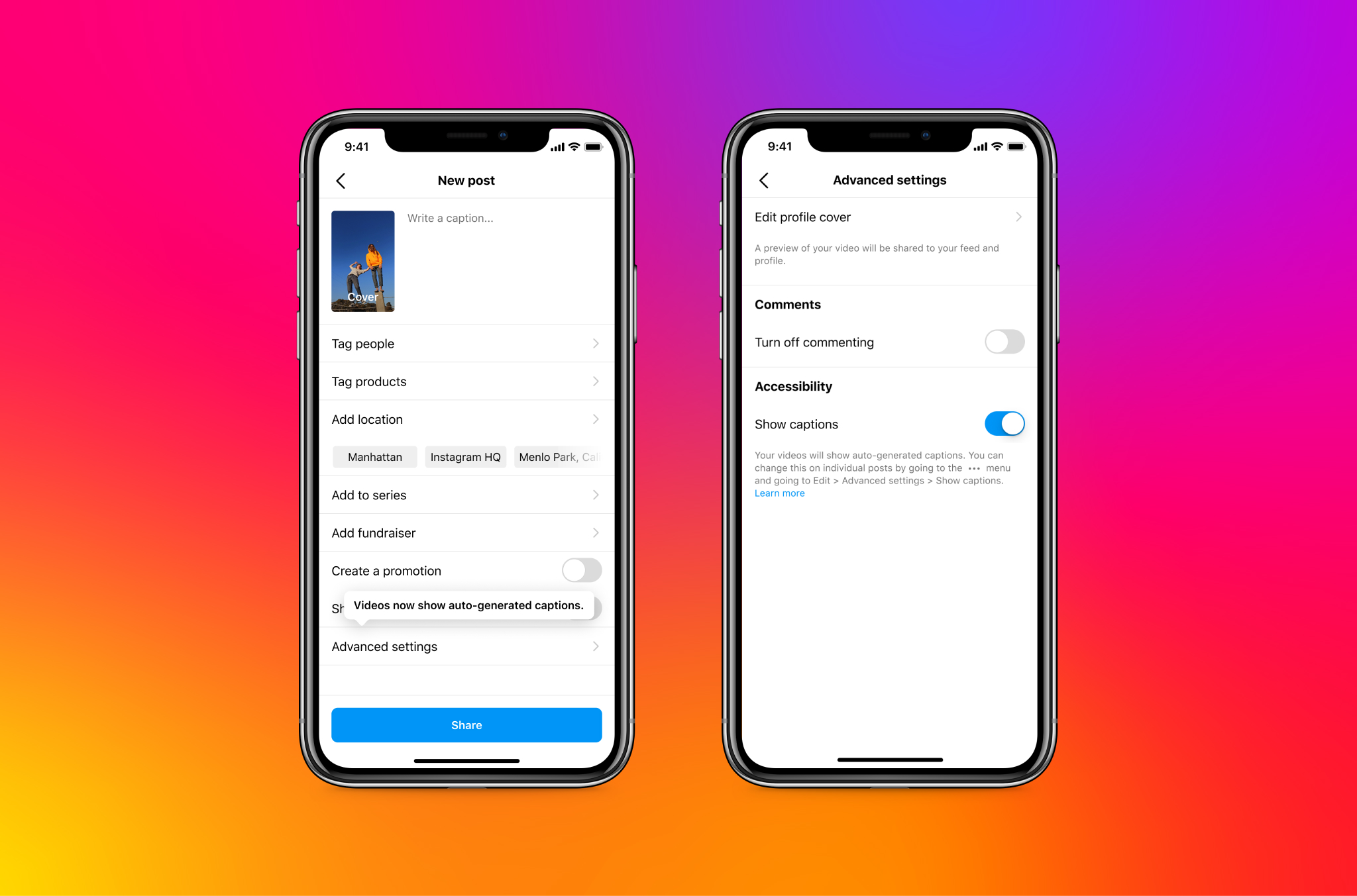
Instagram is introducing auto-generated captions for videos on its app, the company announced on Tuesday. Up until now, creators had to manually add captions to their videos. Instagram says the addition of captions will make Instagram more accessible for users who are in the deaf and hard-of-hearing communities. The new feature will also be useful for users who would prefer to watch videos without sound. The launch comes as TikTok rolled out auto captions in April 2021.

The company confirmed to TechCrunch that auto-generated captions are launching in 17 languages, including English, Spanish, Portuguese, French, Arabic, Vietnamese, Italian, German, Turkish, Russian, Thai, Tagalog, Urdu, Malay, Hindi, Indonesian and Japanese. Instagram says support for more languages is coming soon.

On posts published on his social media accounts, Instagram head Adam Mosseri said the new feature was “a long time coming” and that users will have the option to turn the feature on or off. Users can turn the auto-generated captions on or off by going into their advanced settings in the app and toggling the “show captions” option. Instagram notes that the AI behind the captions will continue to improve as it learns.

Instagram auto captions

Image Credits: Instagram

Today’s announcement comes as Instagram has been updating its platform and rolling out new features to better compete with TikTok. The company has been focused on expanding Reels, its short form TikTok rival, by releasing similar features. Earlier this year, Instagram announced that users can now remix any video content on the app, not just short-form Reels videos. The company officially launched Remix, its version of TikTok Duets, last March. Late last year, Instagram rolled out a new “Reels Visual Replies” feature that lets users reply to comments on posts with Reels. The feature is similar to TikTok’s video replies, which allow users to reply to comments on their content with video responses.

The launch of auto-generated captions also comes a day after Instagram announced that it is ending support for its standalone app for IGTV. As part of the announcement, Instagram said it will now focus on having all video on its main app and that it will continue to simplify and improve video in the main Instagram app over the coming months. Instagram also reiterated its focus on Reels and noted that Reels continue to be the largest contributor to engagement growth on the app and that it plans to continue to invest in the feature.

“Video is a huge part of why people enjoy Instagram, and we love how our creator community uses it to express themselves, collaborate with others, and connect with their followers,” the company had said in a blog post. “Reels continues to be a growing and important part of Instagram and we are excited to invest even more in this format.”


from TechCrunch
via Click me for Details

Ukrainian Woman Berates Boris Johnson For Not Doing More For Ukraine

Daria Kaleniuk made an emotional plea to the British Prime Minister to do more for Ukraine, including military help. Johnson said Britain would not commit to a military confrontation because "the consequences of that would be truly very, very difficult to control."

Source: The Independent

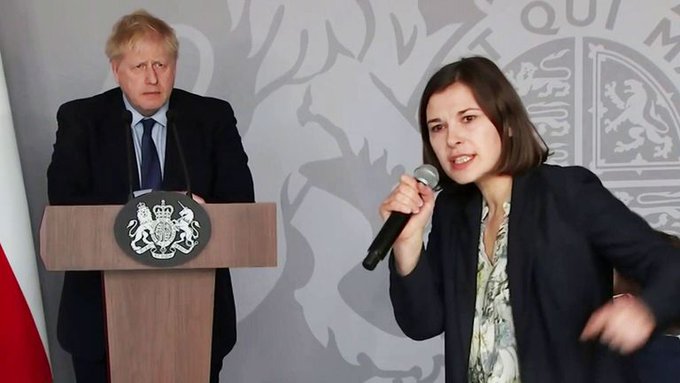
Boris Johnson was berated by a Ukrainian woman who urged the UK to do more amid the ongoing Russian invasion in an emotional speech.

Daria Kaleniuk challenged the British prime minister during a question and answer segment his press conference with Polish prime minister Mateusz Morawiecki.

She accused Nato of being too afraid of World War 3 to act but argued ‘it had already started’ with Putin invading her country.

Ms Kaleniuk, the executive director of the Anti-Corruption Action Centre civil society organisation, told Mr Johnson in Warsaw she is from Kyiv but passed through the border in recent days.

“Ukrainian women and Ukrainian children are in deep fear because of bombs and missiles which are going from the sky. Ukrainian people are desperately asking for the rights to protect our sky, we are asking for a no-fly zone,” she said.

“What’s the alternative for the no-fly zone?

“Nato is not willing to defend because Nato is afraid of World War Three but it’s already started and it’s Ukrainian children who are there taking the hit.

read more


from Latest articles from Crooks and Liars
via Click me for Details