Friday, 25 February 2022

COVID Denier Alex Berenson Labeled Himself 'A Terrorist' At CPAC

Alex Berenson, a frequent Tucker Carlson guest and seminal COVID denier was particularly perturbed at CPAC with the Department of Homeland Security because they consider misinformation about Covid and election fraud lies terror threats to the U.S. Homeland.

Berenson never mentioned his anti-Covid, anti-vaccine stances, which have given him a huge following on Substack and a prominent place on Tucker Carlson's show.

Nope, he was there to bitch and moan.

Here are the DHS guidelines that got Berensen's buns in a twist.

"For example, there is widespread online proliferation of false or misleading narratives regarding unsubstantiated widespread election fraud and COVID-19. Grievances associated with these themes inspired violent extremist attacks during 2021."

Berenson read a portion of the bulletin and said, "You may be a terrorist."

And that's true since Matt Schlapp of CPAC was a cheerleader of the election fraud conspiracies for Trump that led to the Insurrection.

"Okay, I'm a terrorist," he said.

Berenson called it a dangerous outlook by the DHS, but they've been very kind to him since he's not in a jail cell.

Then he pivoted to attack Black Lives Matter protests.

A few minutes later, he cried about big tech censors and being kicked off Facebook and Twitter.

read more


from Latest articles from Crooks and Liars
via Click me for Details

Will Mobile World Congress be more of the same?

I’m not sure precisely when the change occurred, but at some point Mobile World Congress became the smartphone show. It’s a fine thing to be in the world of tech trade shows — and certainly has a kind of outward-facing excitement that’s largely lacking in the world of cellular infrastructure.

Big booths and flashy press conferences from mobile giants are precisely the kind of news-generating content that bring the eyes of the world onto what might otherwise be a trade-only event. Hardware companies got locked into an announcement cycle tied to these shows. CES is where you get the home electronics, the wearables, the dishwashers and, eventually, the cars. But MWC is all about the phones.

But the last several years have had a profoundly cooling effect on the smartphone. Beyond the inevitable shift from novelty to necessity, smartphone sales were already on a downward trajectory before the global pandemic. Buying habits slowed as users grew less attached to the carrier upgrade cycle. And as the price of premium handsets ballooned beyond $1,000, the pace of must-upgrade features slowed.

As much as marketing departments might try to convince you otherwise, generational technology breakthroughs don’t happen every year in consumer electronics. There’s an ironic monkey’s paw-style twist in all of this, too. As manufacturers rushed to outdo one another, smartphones largely got pretty good across the board. If you’re willing to spend more than, say, $500 or $600, it’s hard to go too wrong these days.

Sure, some devices are better than others (I would likely be out of a job, otherwise), but industry advances have made products more durable, with longer-lasting batteries and better specs. As a result, planned obsolescence ain’t what it used to be. There will certainly always be a small and enthusiastic contingent of fans who demand an annual upgrade, regardless of specifics (I probably work with a few of them). But on the whole, phones are better and people hold onto them for longer — a net positive for landfills, but a decided mark on sales.

These things are to be expected from a mature category. The iPhone turned 15 year this year. The first Android device hits that milestone next year. But downward-trending sales figures were accelerated by the pandemic. First there was the simple fact that people weren’t leaving their homes. Disposable income became a motivating factor as some lost jobs and others went on hiatus (to say nothing of the ensuing Great Resignation). What money people were spending on electronics was going toward outfitting home offices.

Then came the supply chain stoppages and chip shortages. Meaning those people who wanted to make an upgrade couldn’t in many markets. And unsurprisingly, these issues have had a disproportionate impact on smaller companies with far less leverage against chip and component manufacturers.

It was destined to be a weird MWC by any measure. In 2020, it became one of the first major tech events to pull the plug, a month and a half after CES got by just under the wire. Last year’s show happened at a much smaller scale. This year, the CES/MWC fortunes flipped a bit, with the latter seemingly having missed the worst of the omicron variant, which gave some of the biggest names in tech cold feet ahead of the Vegas show. Not to mention the other major global event set to have an impact here.

I won’t be at the show this year. In the end, it really didn’t make a lot of sense, as much as I continue to mourn missing out on a week in Barcelona. It’s been one of the great rewards of this job. It’s a fascinating show in one of the world’s great cities that’s been rife with all manner of weird TechCrunch adventures. Maybe I’ll write a memoir some day for the eight people who might be interested in such a thing.

Anecdotally, there doesn’t seem to be much buzz for a major show set to start a few days from now. In addition to general weirdness around big, in-person events, there have been a confluence of factors that appear to point to the beginning of the end of MWC’s days as the world’s premier smartphone launchpad. There’s certainly life left as a major event for mobile networks and infrastructure, even if some of the outward-facing luster has worn off.

There’s been a broader trend of companies going the Apple route and opting to launch devices at their own events on their own terms. This, again, has been accelerated by the pandemic, as companies were forced to put their own infrastructure in place for remote presentations. Samsung did precisely that earlier this month, with its S22 launch. Of course, not every company has the pull of an Apple or Samsung (or, for that matter, Google), so tying themselves to an event like MWC or CES still makes sense.

The mobile industry in general has undergone some dramatic transformations over the past few years, as well. LG stopped making phones. HTC maybe still makes them, but at the very least has backed away from the category in dramatic fashion — notable for the maker of the aforementioned first Android phone. Huawei, meanwhile, is dealing with a lot these days, including sanctions that have precluded its use of the Android operating system and Qualcomm chips. Though perhaps we’ll see some real-deal HarmonyOS handsets?

On the latter front, I think it’s fair to say that Qualcomm’s Snapdragon release cycle has sucked some of the air out of the Fira de Barcelona. While the use of the latest Snapdragon flagship isn’t really a differentiator (Qualcomm owns just under a third of the global mobile chip market), companies can gain a slight advantage by being one of the first to market with it. With Qualcomm’s big event now happening each December, launches keep creeping up earlier and earlier in the year.

Lenovo just announced a new Motorola handset, the Edge Plus, which finds the largely budget-focused brand brushing right up against the $1,000 mark. That means its parent will likely be sticking to laptops. Similarly, Samsung is expected to be using the show to announce a new Galaxy Book, having already showed the world the Galaxy S22. I suppose both technically qualify as “mobile,” but neither really bolster MWC’s image as the smartphone show.

That doesn’t leave a lot of major players. In addition to some potential noise from a Huawei camp looking to claw its way out of the muck, other Chinese manufacturers could fill some of the vacuum here. Oppo’s OnePlus brand unveiled its flagship around CES, but the parent company may well use this as an opportunity to get some press.

Ditto for TCL, which continues working to establish its own brand name. Xiaomi and Vivo, meanwhile, are working to establish themselves outside of their native market and India — though the number one and two smartphone markets already present plenty of room for growth.

With MWC happening next week, it’s too early to definitively say where this all leaves the show — and the industry in general. At best, it’s a transition period at a weird time for hardware makers — an awkward adolescence as the industry looks toward the horizon in hopes of hitting upon the next major disrupter.

Read more about MWC 2022 on TechCrunch


from TechCrunch
via Click me for Details

Thursday, 24 February 2022

Siri gains a new gender-neutral voice option in latest iOS update

Apple has developed a new Siri voice, now available in the beta versions of its iOS 15.4 software, that doesn’t sound obviously male or female. The decision to introduce a gender-neutral voice is one that sees the tech giant taking yet another step away from the criticism that, historically, digital assistants have reinforced unfair gender stereotypes.

Over the years, industry observers and experts argued how the creation of voice assistants with female-sounding names — like Alexa, Siri and Cortana — which also speak with female-sounding voices, implied that women should be the ones to do your bidding at any time and even take your abuse. A U.N. study additionally called out the female voiced-assistants and their submissive and sometimes even flirty and coy styles.

More problematically, the decision to make so many of the virtual assistants female by default was likely driven by a lack of diversity in the teams responsible for building our everyday technology. That issue doesn’t just lead to thoughtless choices with AI voices, it has also delayed the advance of useful tools for women. For example, it took years for Apple to realize that its Health app should probably include a period-tracking feature, considering it’s a health measure relevant to roughly half the human population.

Apple, to its credit, did address concerns with the Siri voice last year when it issued an update that added more diverse voices and, notably, also made it so Siri’s voice would no longer default to being female.

But what if you didn’t have to think about the gender of your AI voice assistant at all?

That’s clearly the intention here with the addition of the new and now fifth Siri voice, though Apple hasn’t yet explicitly said that’s the case.

However, the iOS software’s code provides some hints toward Apple’s thinking.

Developer Steve Mosser found a reference to a gender-neutral Siri voice in earlier versions of the iOS 15.4 beta, and this week he noted the fifth American Siri voice was added to Beta 4 with the filename of “Quinn.”

Quinn, a name with Irish origins, is a well-known gender-neutral name that has been used over the years for both boys and girls. It’s not a coincidence that it happens to also be the name for the new Siri voice. (Apple doesn’t display the voices’ filenames to end users, though — they’re identified in the user interface as just Voice 1, Voice 2, Voice 3 and so on.)

You may end up hearing Quinn’s voice and decide it sounds a bit more female or male to your ears. Though if you set your mind to hear it one way or the other, your interpretation may change to reflect your thinking.

What’s more, the new voice comes across as gender-neutral without reverting to some sort of more robotic cadence. The voice still sounds human, that is with the same natural inflection and smooth transitions heard in the other Siri voices, both new and old.

Apple tells TechCrunch the new voice was recorded by a member of the LGBTQ+ community. It leverages Neutral Text to Speech (Neural TTS) technology to offer its natural sounds. All the English-speaking voices use Neural TTS as do the voices in six other languages (French, German, Spanish, Chinese, Japanese and Korean). In total, Siri users can choose from 16 languages when setting up their device and choosing their preferred Siri voice.

When it comes to inclusion, Apple hasn’t just focused on Siri’s voice but also on what the digital assistant says. Over the past several years, Apple added Siri responses about Black Lives Matter and Stop Asian Hate, and introduced strong responses to abusive gender or sexuality-based utterances. Apple also rolled out more accessible voice features like Speak Screen, Dictation and Voice Control.

“We’re excited to introduce a new Siri voice for English speakers, giving users more options to choose a voice that speaks to them,” an Apple spokesperson said, in response to our inquires about the new Siri voice. “Last year we introduced two new voices and removed the set voice default as part of Apple’s long-standing commitment to develop products and services that better reflect the diversity of the world we live in. Millions of people around the world rely on Siri every day to help get things done, so we work to make the experience feel as personalized as possible,” they said.

The new voice option will roll out English speakers with iOS 15.4, which is expected to arrive sometime in March.


from TechCrunch
via Click me for Details

If you give Tumblr $4.99 a month, you won’t have to see ads anymore

Tumblr announced today that it’s rolling out an ad-free browsing experience for web and mobile. On a monthly basis, you’ll have to pay $4.99 per month for what Tumblr calls “pure, unadulterated nonsense,” but its yearly price of $39.99 gives you four months free. To opt-in, users can navigate to to their account settings and press the “go ad-free” button, where they will be prompted to choose between a yearly or monthly subscription. Though ad-free browsing is available on mobile too, it can only be enabled on the web. While the feature hides third-party ads, it doesn’t hide sponsored posts from Tumblr users.

This is Tumblr’s latest attempt to monetize the platform, which has depreciated in value over the years. In the last several months alone, Tumblr has unveiled a Post+ subscription, as well as Tipping, which allows users to send their favorite bloggers cash via Stripe. Tumblr earns a 5% commission on Post+ earnings, but all tips go directly to creators, minus standard credit card fees (2.9% + $0.30).

Tumblr’s audience is notorious for lashing out against any change to the platform, but an ad-free subscription is a less-intrusive feature than paywalling posts. Tumblr serves exceptionally strange ads (our personal favorite is the one that suggests you purchase one square foot of land in Scotland to become a Lord), but some users pointed out that they already get an ad-free Tumblr by using browser extensions, so they aren’t incentivized to pay.


from TechCrunch
via Click me for Details

Americans Don't Like Republican War On Education

People in the United States do not like book-banning, a new poll shows, as Republicans around the country seek to ban huge numbers of books from schools. And people don’t like the basic foundations of Republican attacks on teaching about race and racism, either, according to the CBS News poll, which focused on race as part of Black History Month coverage.

It’s not the only recent poll to highlight that the Republican education culture wars, as big a megaphone as they’re getting from Fox News and prominent politicians, are not what most people want. Can someone tell Republicans this? Better yet, can someone tell Democrats?

read more


from Latest articles from Crooks and Liars
via Click me for Details

More automatons about buildings and food

As I noted last year, we’re ramping up to return to Boston this July for our TC Sessions Robotics event. Our March 2020 event on the Berkeley campus was the last major in-person TechCrunch show before everything shut down. For what should probably be self-evident reasons, we decided that robotics is a subject best experienced up close, so we took 2021 off.

I’ve been champing at the bit for the past two years or so thinking about the programming for this one, and now that we’ve started the early stages, it’s hard to shut off the firehose. When we’re ready to start announcing guests, I’ll no doubt be devoting some column space to those folks.

Meantime, I’ve been thinking a lot about how the industry has evolved since this all started. I feel fairly confident when I say that future historians will point to this as the moment of great acceleration, when — after decades of talking about the future — robotics truly became a part of everyday life.

Some verticals are much further along than others, of course. Delivery is making quite a bit of progress — at least from the investment side. Regulation and implementation are a  bit slower going. Understandably so. In addition to manufacturing — a longstanding application, especially in automotive — warehouse fulfillment has been white hot of late. Amazon got the ball rolling on that, and now the rest of the industry is trying to catch up.

Image Credits: RightHand Robotics

And then COVID happened. Then labor shortages. Then supply chain concerns. Decentralized logistics is really the only way to go these days, and those fulfillment centers are increasingly likely to be staffed by robots, like the pick and place machines created by RightHand, which just raised another $66 million.

The company’s funding is currently hovering around $100 million. It’s a healthy — but not wild — sum for a startup that’s got a lot of real-world hours under its belt. Among the long list of notable investors here is Zebra Technologies, which, as I noted yesterday, bought Fetch last year.
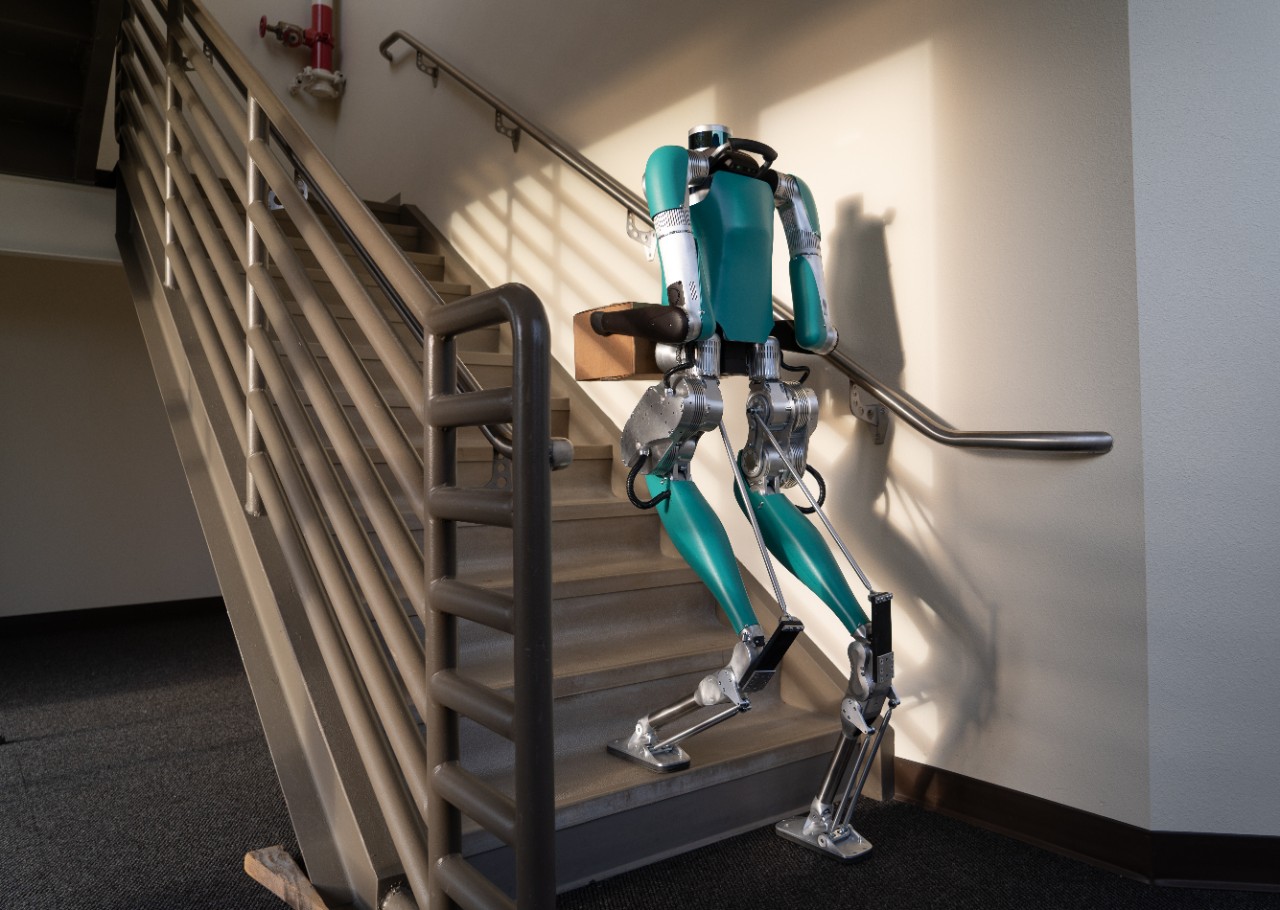
agility robotics digit

Image Credits: Ford/Agility Robotics

Oh, and while we’re talking both logistics and delivery, allow me to quickly plug my talk next week with Agility Robotics CTO Jonathan Hurst and PlayGround Global founding partner Bruce Leak. That’s Wednesday at 11:30 am PT / 2:30 pm ET. More info here.

Anyway, if you were to ask me which categories are on the cusp of breakthrough, I would give you two answers: agtech and construction. These are both massive industries with so much opportunity for automation. Agriculture, in particular, is an interesting one. It’s ripe for the proverbial picking. If you’ve read this far, you almost certainly understand how tough the category is, and we’ve seen some recent stumbles.

John Deere is pumping a lot of money into robotics, both through in-house development and acquisitions of companies like Bear Flag. For reasons of it being John Deere, it’s well-positioned to remain a major player in autonomous tractors. But labor shortages are a very real thing here — and the average age of a farmer in the United States is a few months shy of 60, for what’s often extremely back-breaking work.

The next several years are going to be wild for agriculture in general — particularly as climate change continues to be top of mind. It’s a subject that will likely increase interest in alternative approaches to the category, like the vertical farming we discussed last week. But the 10,000-year-old world of agriculture isn’t going to change overnight. In a sense, robotics offers a kind of way to retrofit existing ways of tending the land with new technologies.
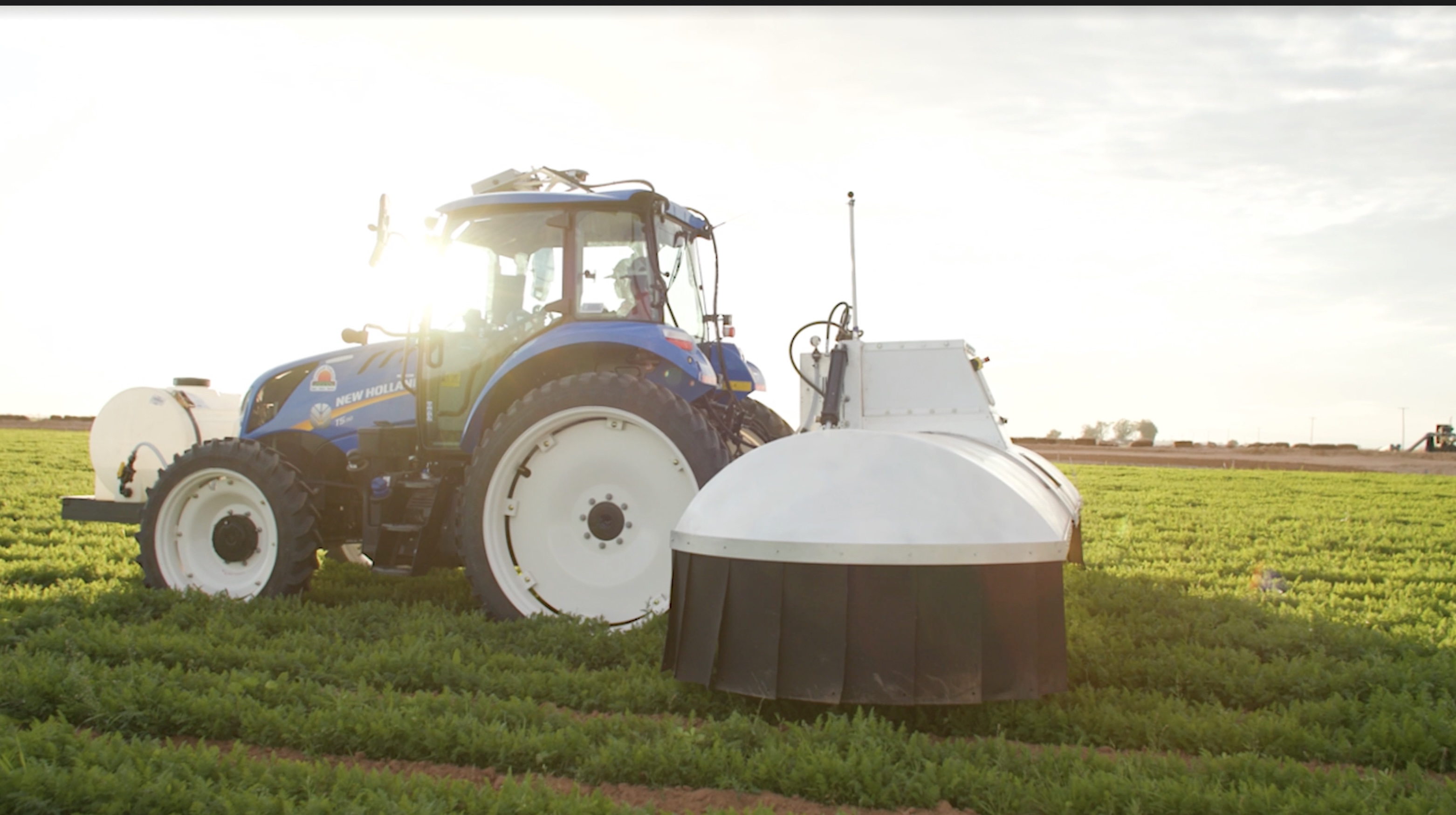
Image Credits: Verdant

Given all of the advancements made to autonomy in recent decades, there’s a lot of opportunity there. And while you obviously need to make the systems safe, you’ve got far fewer points of failure in a field than your average city block. Verdant this week announced an $11.5 million raise, bringing its total to $21.5 million.

The Hayward, California-based company offers a robotic system that does a combination of laser- and spray-based weeding, coupled with taking scans of fields designed to give farmers more data on their crops.

“Farmers told us not to give them more data, but to figure out what to do with the mountains of data they already have, or better yet just go do it,” co-founder and CEO Gabe Sibley said. “They want a complete solution that takes action in real time and keeps farmers in control — all while improving profitability and automating dangerous, back-breaking field work.”

Leko Labs housing development

Image Credits: Leko Labs

Construction is another category that’s ripe for some massive robotic disruption. I say that as a resident of a city that’s seemingly constantly under construction — so if you could build some quiet robots to do some of the work, that would really help me out. Anyway, Natasha had the story this week about Leko Labs’ $21 million Series A. The firm is working to bring more sustainable materials to home construction, using an “automotive style, robotics driven” approach.

Image Credits: Hyphen

I wouldn’t put kitchen automation at the top of the list, but it’s certainly one that has been catalyzed by the pandemic in a major way. Two years in, and restaurants are having as hard a time as ever staying staffed. We wrote about Hyphen in this very newsletter as the startup came out of stealth, and this week it announced a $24 million Series A led by Tiger Global for its modular conveyer belt kitchen system.

The system specializes in bowls/salads, which is probably what you want your robot to be cooking if it’s not trying to make pizzas and/or flipping burgers. Also, a quick mention for Dexai Robotics, which signed $1.6 million contract to bring its cooking arm, Alfred, to U.S. military installations.
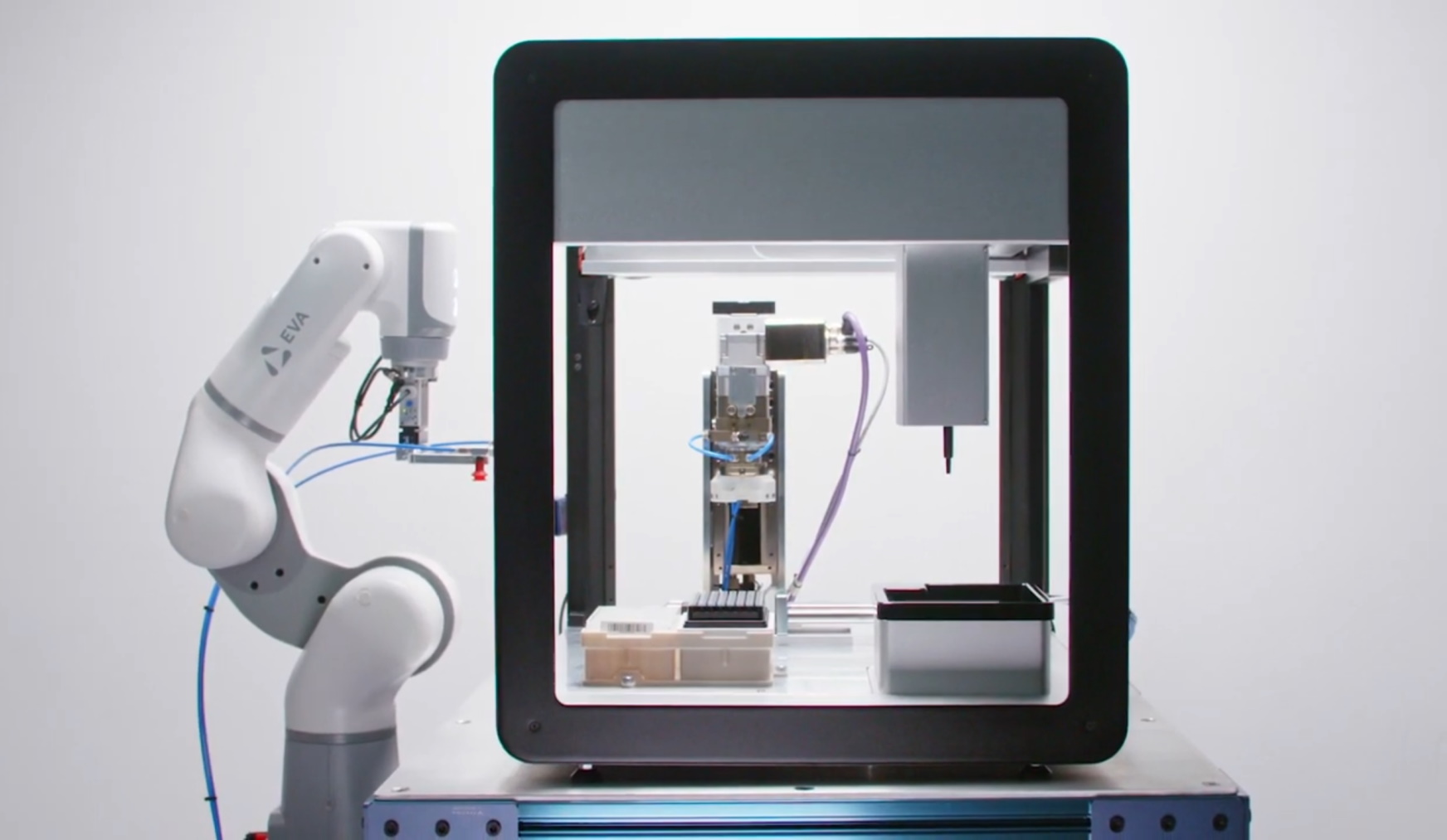
The Automata Labs enclosure with Eva robotic arm next to it.

The Automata Labs enclosure with Eva robotic arm next to it. Image Credits: Automata

Automata is something of a dark horse this week. Lab automation isn’t something we’ve covered much in this newsletter, but COVID has really shone a light on the need for rapid lab results. The firm this week announced a $50 million Series B aimed at fully automating the laboratory process.

“We’ve had to build an entirely new hardware stack that allows for this kind of automation,” co-founder and CEO Mostafa ElSayed told Devin. “The benchtop is really the standard unit of all laboratories, so it’s basically a whole lab bench that’s amenable to automation.”

And finally, the real automation we’re all waiting for. Here’s Amazon’s Astro bringing someone a beer. The expensive home robot recently started shipping out to customers.
Image Credits: Bryce Durbin/TechCrunch

This free weekly robotics newsletter is just a signup away. 


from TechCrunch
via Click me for Details

How to strategically manage your startup advisor’s compensation

The best founders often attribute their success to a deep bench of mentors and advisors, but how do founders compensate these core parts of their network?

I see tons of founders being asked to compensate advisors with hard cash, and I’m immediately shocked to hear they have graciously agreed to do so. Advisor compensation is something founders find very difficult to navigate and I am often asked for my two cents.

When it comes to cash compensation, my initial response to founders is that cash at startups should be reserved for services like legal, accounting, marketing and other outsourced contractors. However, when it comes to more qualitative support and advice, the people helping founders need a more accurate alignment of incentives in the form of equity-based compensation.

The excess of capital in venture-funded startups has also attracted a litany of coaching services to the space, many of which are great. There are, however, a few operations out there that are angling to get exposure to the growth in tech startups. These coaches often position themselves as advisors to CEOs and either demand significant cash compensation or cash in addition to equity options from the company.

For good advisors who truly want to get their hands dirty and help founders succeed, a lucrative equity package based on results makes a ton of sense.

In order to create a better sense of alignment, I recommend that founders put in place certain terms that both parties must meet in order to unlock the value of that equity. For instance, founders can implement a vesting structure that requires advisors to meet certain metrics over time in order to unlock the value of their compensation — sometimes over many years.

A good example would be a partnership advisor: set goals around the number of partnerships from their network. If the advisor meets these goals, they’re eligible for the compensation. If not, then the founder can be protected from deploying that equity. Again, these coaches, advisors, mentors or whatever title they wish to hold should not be compensated in cash. That’s not because cash is more important than equity, but because it is much harder to tie to outcomes once it has been awarded.

In one of the more egregious examples of an external party taking advantage of founders that I’ve seen, an advisor offered to recruit talent for the startup. He purported to offer those founders a deal by taking a 50% reduction in cash relative to his usual rates, and the company paid him in shares to make up the difference.


from TechCrunch
via Click me for Details
