Wednesday, 1 December 2021

Amazon Lex brings automated call transcript review to chatbot building

Today, at AWS re:Invent in Las Vegas, the company announced Amazon Lex in preview, a new tool that simplifies the chatbot training and design process by bringing a level of automation to it.

“We are excited to announce the Amazon Lex automated chat bot builder, a new capability that reduces bot design from weeks to just hours,” Swami Sivasubramanian, VP of Amazon AI told the audience at the AI and machine learning keynote today.

It does this by taking advantage of advanced natural language understanding powered by deep learning techniques. In fact, he said that developers can now create a foundational chatbot designed using historical call transcripts in just a few clicks.

“[The Lex] automated chat bot designer can typically analyze 10,000 lines of transcripts within a couple of hours to identify intents such as ‘file a new claim’ or ‘check claim status.’ It makes sure these intents are well separated and there is no overlap between them, eliminating the need for a trial and error approach,” he explained.

He said that without this automation, it’s a highly manual and tedious developer task. “The organizational design of a chatbot is highly complex, manual and prone to errors. It requires understanding the nuances of a spoken language and human interactions, and without this specific expertise, developers spend hundreds of hours combing through all the historic called transcripts to find things like common user requests and the required information to to solve this problem.”

When you think about a common use case for AI, chatbots certainly come to mind. They may be designed for in-house use to answer questions about how to order a new computer or get your newborn child on the company health insurance, or they may act as a customer service frontend to collect vital information and answer simple questions, while funneling more complex questions to a human customer service agent.

Many startups have launched to make it easier to create more accurate chatbots, but it’s also low hanging fruit for a company like Amazon, whose customers may be looking for a solution on the platform to go with their other AI and machine learning projects.

Amazon Lex is available starting today in preview. Developers can use Lex for free during the preview phase, but will be charged based on the time it takes the tool to analyze a transcript and identify the intents once it is generally available.

read more about AWS re:Invent 2021 on TechCrunch


from TechCrunch
via Click me for Details

T-minus three days left to save on passes to TC Sessions: Space 2021

Countdowns aren’t just for space launches, you know. They’re also for serious savings on passes to the all-virtual TechCrunch Sessions: Space event which, no spoiler alert here, also includes expert presentations on the business of space launches.

Right now, you have only T-minus three days left to save $100 on the price of admission to our two-day conference designed specifically for the visionaries building, funding and forging a new space economy.

Buy your pass before December 3 and keep $100 in your personal economy.

Every TechCrunch event features the top movers and shakers in their industry, and we’ve got an amazing lineup of brilliant space cadets ready to share their expertise and insight to help you grow your startup or your investment portfolio.

You’ll find every interview, presentation, panel discussion, breakout session and networking opportunity listed in the event agenda. Here’s a quick sample of the people and topics TC Sessions: Space 2021 has in store for you.

Securing Space at Speed — The demand signal is clear: The U.S. government needs to spur innovative commercial capabilities to excel in an increasingly contested space domain. Hear directly from leaders driving government-commercial collaborations about opportunities to help usher in the next era of achievement in space. Steve Isakowitz (Aerospace Corporation) and Pete Muend (National Reconnaissance Office).

Space SPACs and the Public Market — We saw a number of space companies go public this past year, and many took the SPAC merger route to get there. Andrew Rush (Redwire), Adam Spice (Rocket Lab) and Astra will talk about their respective paths to the public markets and what it’s meant for their companies and the industry.

How tech startups do business with the DoD and U.S. Space Force — Sam Riehn (SBIR Advisors) will describe the three main problems technology startups face when working with the Department of Defense (DoD). Learn how to overcome them and win multimillion dollar deals with the DoD and U.S. Space Force using the Small Business Innovation Research (SBIR) and Small Business Technology Transfer (STTR) programs.

A word about the out-of-this-world networking opportunities (another space pun: sorry-not-sorry). In addition to the scheduled breaks, don’t forget to go see the 10 early-stage space startups exhibiting in our virtual expo — they’re a mighty impressive bunch.

Plus, you’ll find plenty of attendees from aerospace primes like Aerospace Corporation, Boeing, Lockheed Martin, Maxar Technologies and Northrup Grumman. Use CrunchMatch, our AI-powered networking platform, to find them and schedule a meeting. Or take a less formal approach and introduce yourself using the chat feature in our virtual event platform.

TC Sessions: Space 2021 takes place on December 14-15. The countdown is on, and your time is running out. Buy your pass before December 3, and you’ll save $100.

Is your company interested in sponsoring or exhibiting at TC Sessions: Space 2021? Contact our sponsorship sales team by filling out this form.


from TechCrunch
via Click me for Details
AWS launches new SageMaker features to make scaling machine learning easier

At its annual re:Invent conference, AWS today rolled out a slew of new features for SageMaker, the company’s managed service for building, training and deploying machine learning (ML) models. Swami Sivasubramanian, the vice president of machine learning at Amazon, said the new features aim to make it easier for users to scale machine learning in their organizations.

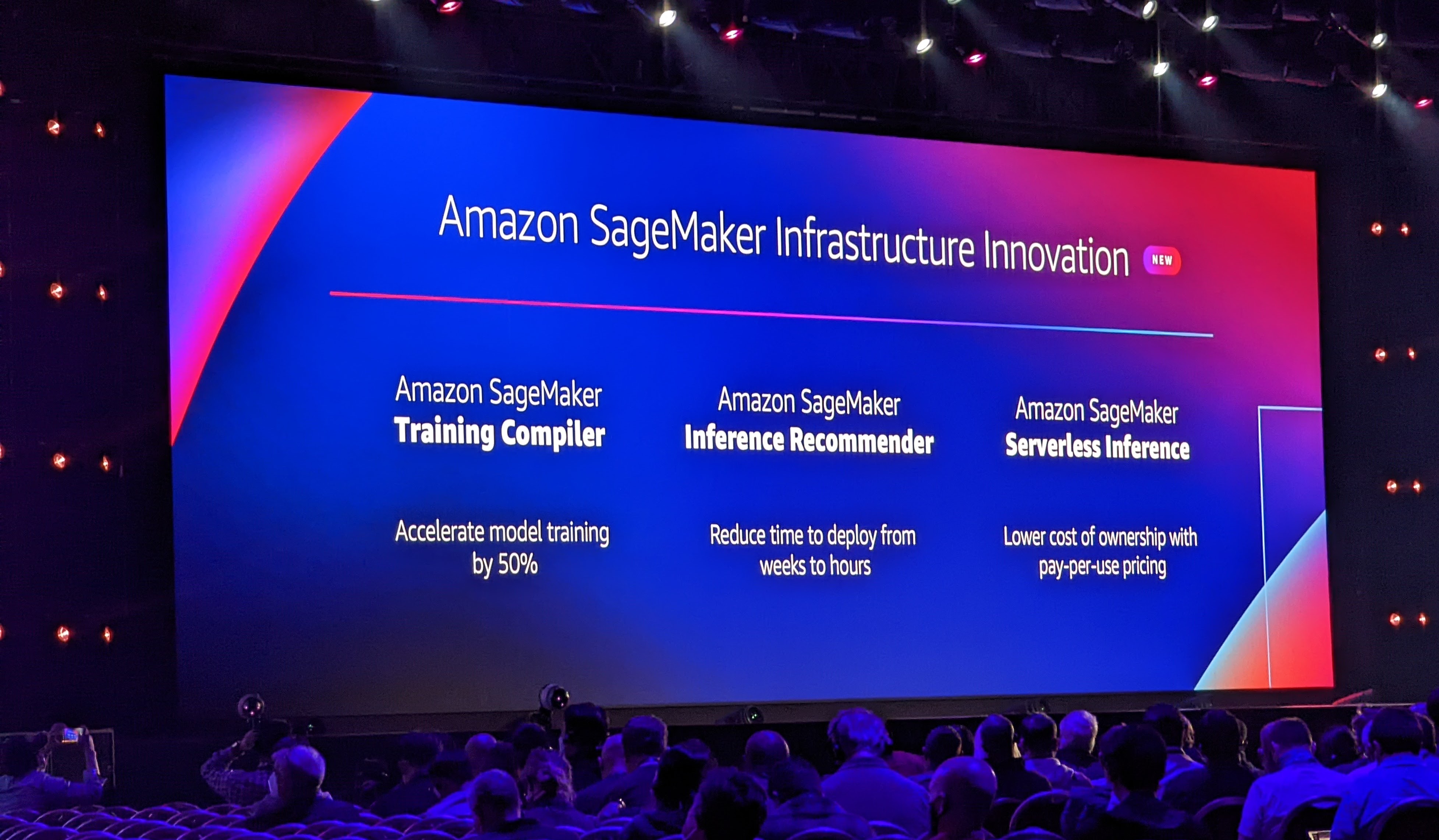
Firstly, AWS launched a new SageMaker Ground Truth Plus service that uses an expert workforce to deliver high-quality training datasets faster. SageMaker Ground Truth Plus uses a labeling workflow including machine learning techniques for active learning, pre-labeling, and machine validation. The company says the new service reduces costs by up to 40% and doesn’t require users to have deep machine learning expertise. The service enables users to create training datasets without having to build labeling applications. It also allows you to manage the labeling workforce on your own. SageMaker Ground Truth Plus is currently available in Northern Virginia.

The company also rolled out a new SageMaker Inference Recommender tool to help users choose the best available compute instance to deploy machine learning models for optimal performance and cost. AWS says the tool automatically selects the right compute instance type, instance count, container parameters, and model optimizations. Amazon SageMaker Inference Recommender is generally available in all regions where SageMaker is available except the AWS China regions.

In addition, AWS released the preview of a new SageMaker Serverless Interface option that allows users to easily deploy machine learning models for inference without having to configure or manage the underlying infrastructure. The new option is available in Northern Virginia, Ohio, Oregon, Ireland, Tokyo and Sydney.

Image Credits: TechCrunch

With SageMaker Training Compiler, AWS today launched a new feature that can accelerate the training of deep learning models by up to 50% through more efficient use of GPU instances. The feature covers deep learning models from their high-level language representation to hardware-optimized instructions. The new feature is generally available in Northern Virginia, Ohio, Oregon and Ireland.

Lastly, AWS announced that users can now monitor and debug their Apache Spark jobs running on Amazon Elastic MapReduce (EMR) right from SageMaker Studio notebooks with just a click. The company notes that you can now also discover, connect to, create, terminate and manage EMR clusters directly from SageMaker Studio.

“The built-in integration with EMR therefore enables you to do interactive data preparation and machine learning at peta-byte scale right within the single universal SageMaker Studio notebook,” AWS explains in a blog post.

The new SageMaker Studio features are available in Northern Virginia, Ohio, Northern California, Oregon, central Canada, Frankfurt, Ireland, Stockholm, Paris, London, Mumbai, Seoul, Singapore, Sydney, Tokyo and Sao Paolo.

On a related note, AWS also today launched SageMaker Studio Lab, a free service to help developers learn machine learning techniques and experiment with the technology. Yesterday, AWS announced a new machine learning service called Amazon SageMaker Canvas. The new service will allow users to build machine learning prediction models, using a point-and-click interface.

read more about AWS re:Invent 2021 on TechCrunch


from TechCrunch
via Click me for Details
3D printing company Essentium set to go public via SPAC

The world of additive manufacturing is not immune from the SPAC craze. Desktop Metal, Shapeways, Markforged and Velo3D have all either completed or announced plans to go public through the process. Austin-based Essentium this week highlighted plans to add its name to the growing list, courtesy of a reverse merger with Atlantic Coastal Acquisition Corporation.

The deal would value the combined companies at $974 million, including $345 million in cash, courtesy of Atlantic Coastal. Essentium cites on-going supply chain issues as a motivating factor in growing interest around additive manufacturing/3D printing.

“Fundamental deficits in our existing global supply chain models are being exacerbated by escalating obstacles such as trade imbalances and the global pandemic – all leading to protracted distribution bottlenecks,” CEO Blake Teipel said in a release. “Today’s announcement represents a major milestone in our efforts to provide long-term, sustainable solutions for a new manufacturing paradigm that can meet these global challenges head-on.”

We spoke to Teipel back in 2017, when Essentium detailed a plasma-based system that fuses together plastic 3D printed material as it prints, resulting in a stronger object than the traditional FDM process. Essentium also utilizes a High Speed Extrusion process, one it claims is 5x to 15x faster than standard extrusion. The company’s existing clients include the U.S. DoD, Lockheed Martin and Ford.

The deal is expected to close in Q1 2022.


from TechCrunch
via Click me for Details

Sounding Board lands Series B to move coaching beyond services and into SaaS

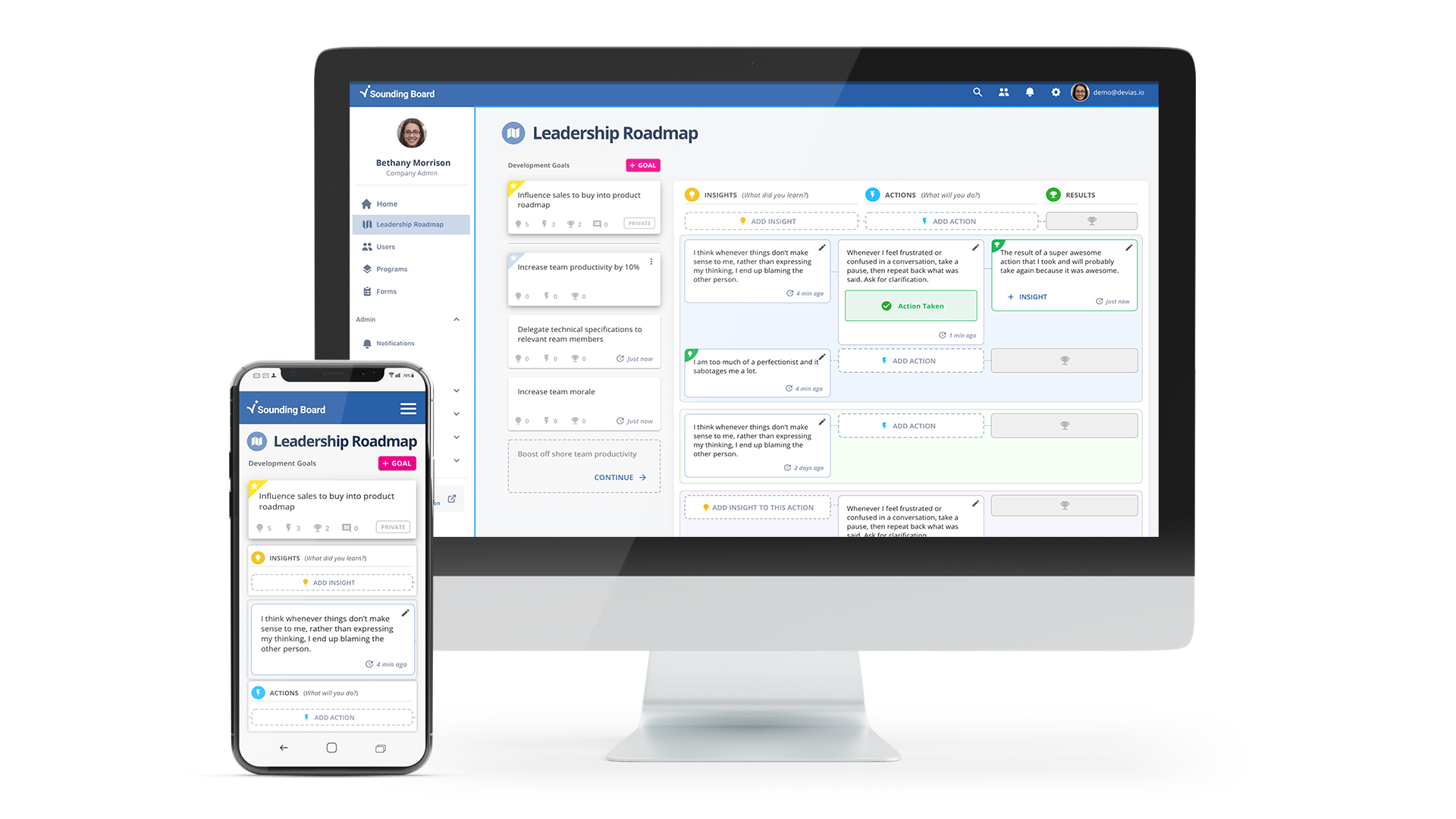
Sounding Board, which started as a platform to connect leaders to coaches through a marketplace, realized early in the pandemic that mentorship needs a refresh.

“We’ve always delivered coaching in this traditional services format,” said Christine Tao, Sounding Board CEO and co-founder.” “Well, we’re not in the office anymore so we actually have to speak differently about how we’re developing our talent and our leaders.” The insight led to the launch of a software platform that let users not only connect with coaches, but also track goals on an ongoing basis.

Now, nearly a year after landing a Series A with this vision, Sounding Board has closed a $30 million Series B led by Jazz Venture Partners, and joined by Gaingels as well as angel investors such as theBoardlist’s Sukhinder Singh Cassidy, Ancestry.com’s Deb Liu, Udemy’s Yvonne Chen and Engage VC’s Tammy Aguiloon. Previous investors in the company include Canaan Partner and Precursor Ventures.

The round also saw JAZZ Venture Partners’ John Spinale join the board, an addition to Sounding Boards’ all-female team (and all-female board). ‘The joke is that we actually had to add diversity to our board…a man,” Tao laughed.

The fundraise comes off of solid growth for Sounding Board, which touts that it has had sequential growth for the past seven quarters. While Tao wouldn’t share specifics on revenues, the company said revenue was in the ‘multi-millions’ in the past and annual bookings have increased more than 350% year over year. Looking at stickiness, Sounding Board claims that net revenue retention is over 200%, meaning that existing customers continue to pay for the platform as time goes on.

BetterUp, one of Sounding Board’s largest competitors, has been on a recent acquisition spree that illustrates a similarly shifting focus on the software behind coaching. It bought Motive to help BetterUp clients understand the emotional context behind data that they already aggregate, through engagement surveys or polls. The unicorn also scooped up Impraise, which uses technology to help managers better support their direct reports, through real-time performance reviews and more seamless feedback channels.

Tao thinks BetterUp’s growth has helped elevate the importance of executive training to investors, but still sees room for more leadership-focused services instead of a broad-based coaching tool. Over the last year, the co-founder said she’s seen a lot of solutions that are focused on helping individuals manage their capacity through supporting mental and emotional state (i.e. BetterUp care).

“But alongside that you actually also need to have real skills and capability to be able to manage and effectively communicate,” she said. Sounding Board is more interested in solving for the capability side of executive training, and for now, has no plans to focus on the mental health aspect of it. Of course this could cause competitors to win market share from Sounding Board if they offer both sides in a rich way. For now, Sounding Board’s customers don’t seem to mind.

“If you think about your company’s benefits [with mental health], it’s a bit more hands off… it’s kind of there and then you choose whether or not you opt into it but it’s really meant to be there for employees ” she said. “Whereas I think for capability-building there is this business need, investment they want to mke, and a level of responsibility that they have.”

Sounding Board currently has 100 customers, including Plaid, Chime and Bill.com.


from TechCrunch
via Click me for Details

Wait Til You Hear What Kimmel Called Tucker Carlson This Time

Jimmy Kimmel has had it with the non-stop villainizing of Anthony Fauci from the Right.

“Remember AIDS, Ebola, the Zika virus? He worked on all of those things, and thank God there’s someone who is educated enough and devoted enough to figure this stuff out for us, because we are not going to figure it out ourselves." said Kimmel in Tuesday's monologue.

"And what are the thanks he gets? He gets scumbags like Ted Cruz, like Rand Paul, like that vile, inflatable Macy’s parade balloon of dogsh*t, Tucker Carlson making up lies to take him down." The audience cheered Kimmel's depictions.

And then Kimmel explained the right-wing motive, and he got it exactly right: "...the reason they do it is they can keep terrifying old people, which is basically what they do for a living. They scare senior citizens in order to get ratings and money and votes, but to do that, they need villains. To scare grandma, they need fresh villains. So they zero in on this tiny, adorable, tired man, who has done nothing but good for this world. Dr. Fauci has probably done more good for the world than all of us in this room combined.”

Thank you, Jimmy Kimmel, for defending Dr. Fauci. It so often takes a comedian to tell the truth.

read more


from Latest articles from Crooks and Liars
via Click me for Details

A student where the shooting started didn’t know ‘if I was going to live or die.’


By BY GIULIA HEYWARD from NYT U.S. https://ift.tt/3Ia0tKm